BDB Pro — AI Application Scoring
- Stack
- Next.js · Supabase · n8n · Claude Vision · Shopify API · Vercel · Spec-driven with OpenSpec
Overview
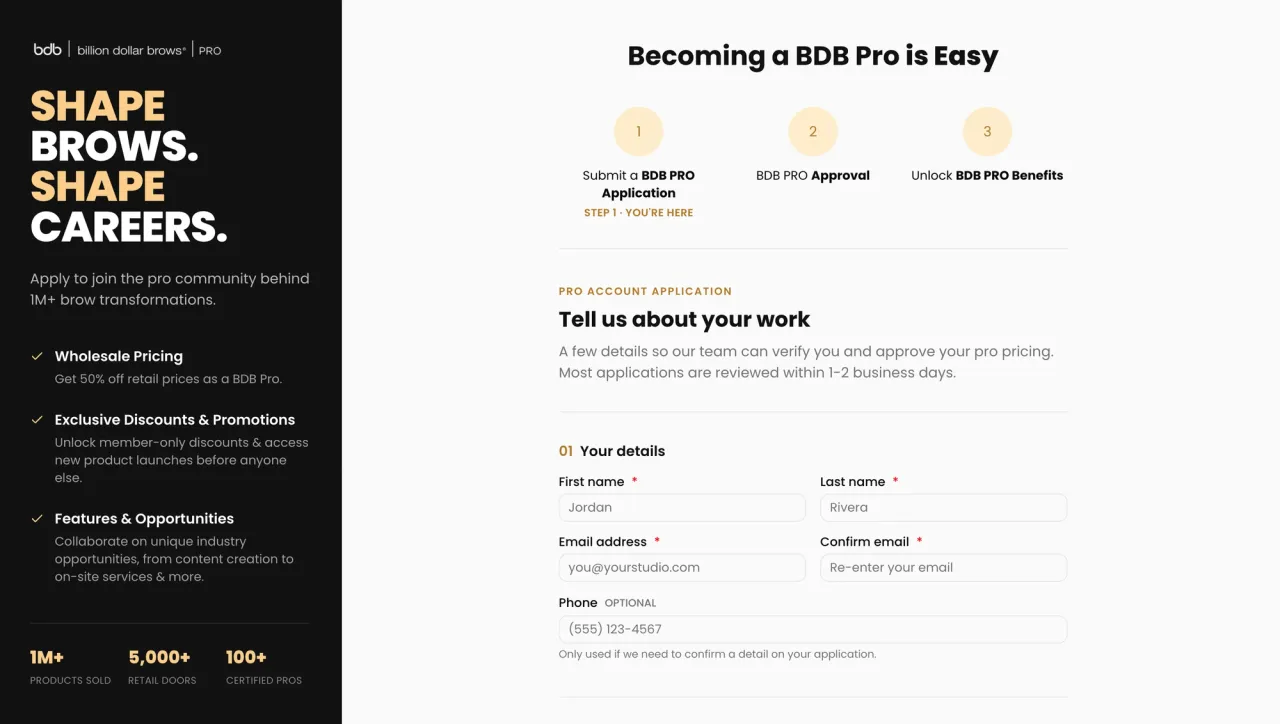
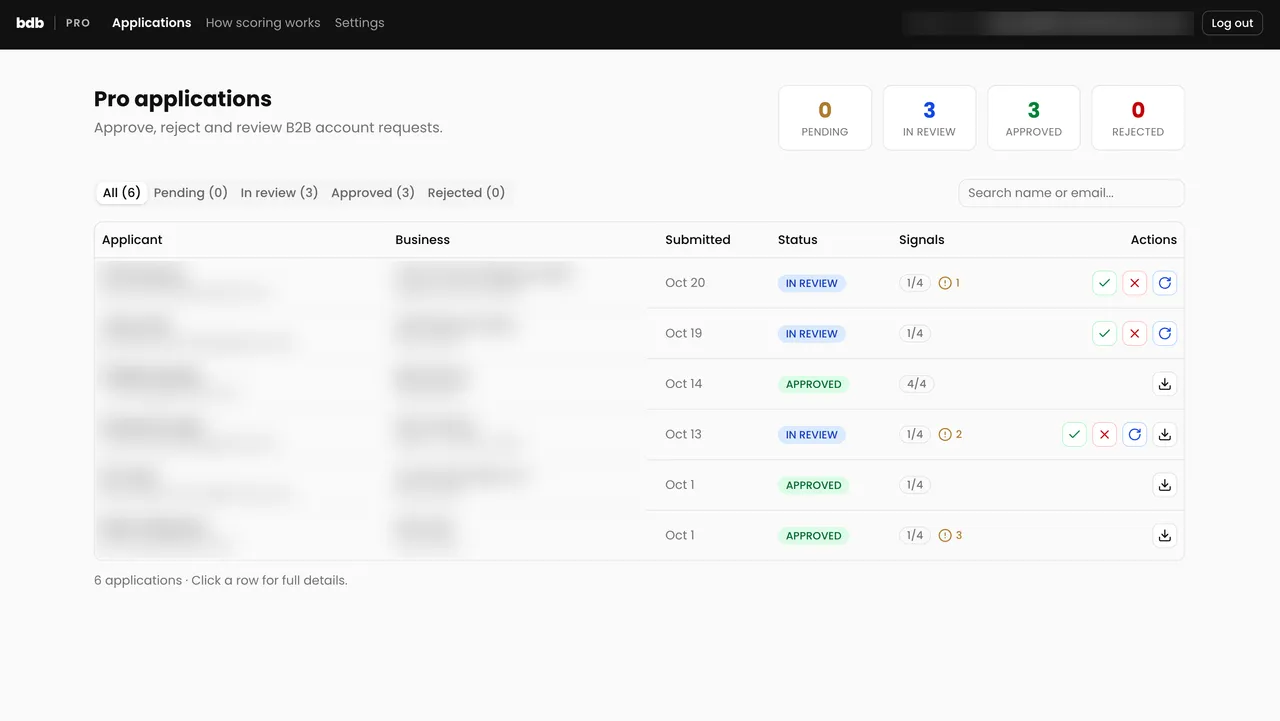
Application portal for Billion Dollar Brows' professional program. Brow artists and beauty pros apply, upload their license, and get Pro pricing on the brand's Shopify store. Before this, the team vetted every applicant by hand. An AI pipeline now checks the applicant's Instagram, reads the credential document and approves the clear cases on its own. The team only sees the ambiguous ones. Approval creates a Shopify customer account with Pro pricing right away. It went from first commit to production in under 12 weeks.
Built during my time at Step Labs
How it's built
-
Product
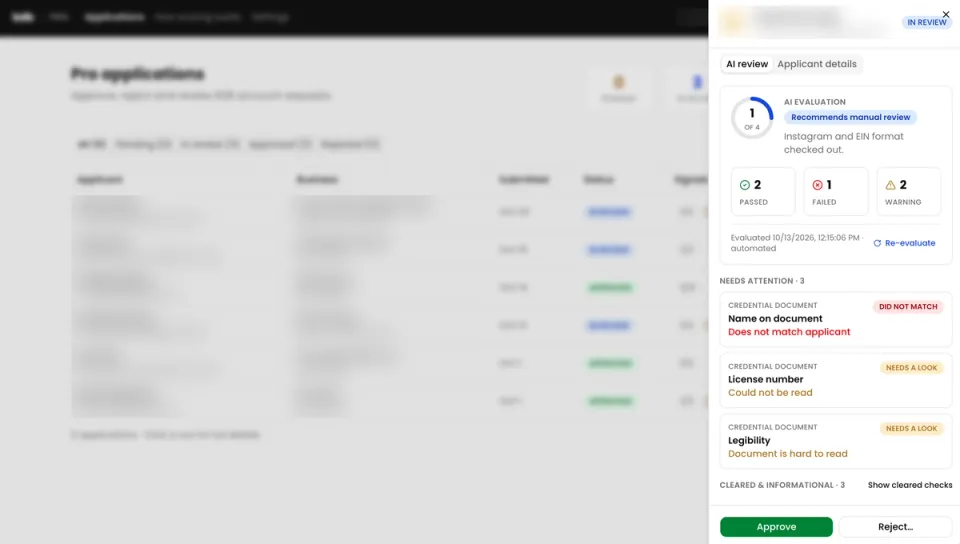
I designed it so most applicants never need a human to look at them, and the team always knows why the system decided what it did. Applicants get real-time duplicate-email checks, and phone photos of certificates are converted from HEIC and resized before upload, so they just work. On the admin side, each application has a detail view split into "AI review" and "Applicant details", flags that explain every signal, and a scoring-rules page in plain language.
-
Architecture
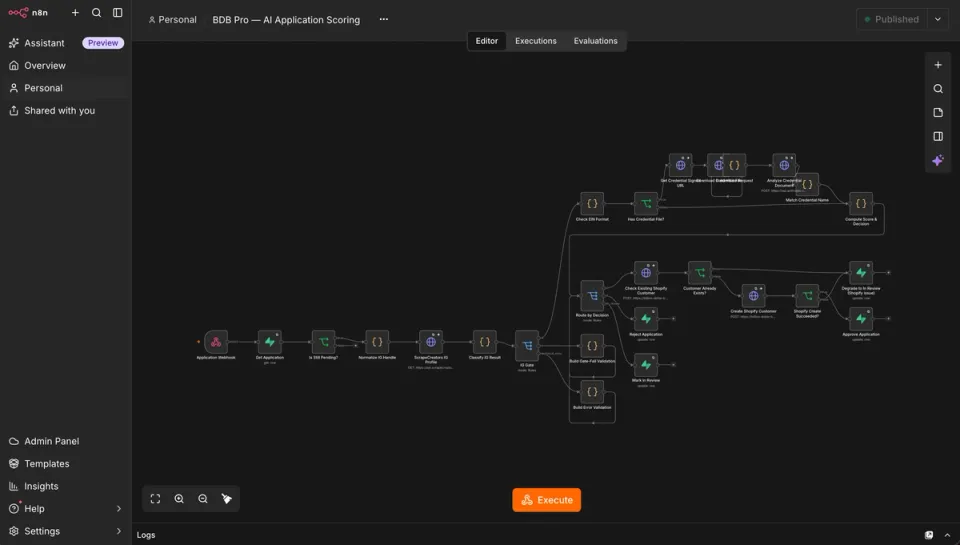
Everything is driven by the application's status, and Postgres is the single source of truth. Database triggers using pg_net send a webhook on insert, which starts AI scoring, and on every status change, which sends the emails. An approval sends the same emails whether an admin or the AI made the decision. Row Level Security is on with no public policies, all writes go through the server, and credential files sit in a private bucket that the browser uploads to through signed URLs. Store and email credentials live in a settings table, so we moved from the dev store to the production store without a redeploy.
-
AI Pipeline
An n8n workflow with a hard gate first: if the Instagram profile doesn't exist, the application is rejected automatically. Claude Vision then reads the license, whether it's a PDF or a phone photo, and extracts 10 fields. Names are matched word by word with a confidence level, which handles compound Hispanic surnames, married names and business licenses that name the owner. QA with real client certificates turned up a serious flaw: PDFs were never being evaluated, and an applicant could be auto-approved without any document being checked. We rebuilt the pipeline so no one is approved unless the AI has verified a document. Any failure sends the application to manual review instead of leaving it stuck as pending.
-
Integrations
Shopify Admin GraphQL connects through OAuth, because Shopify stopped allowing new legacy custom apps in 2026. Approval creates a customer tagged as Pro and sends Shopify's own account-activation invite. Approval is idempotent: re-approving someone reuses their existing customer instead of failing. Duplicate checks cover both Shopify customers and earlier applications. Resend handles the approval, rejection and "needs review" emails, and a rejection email only includes a note when a human wrote it.
Wanna talk? Send me a message.
bianca@bimevi.dev